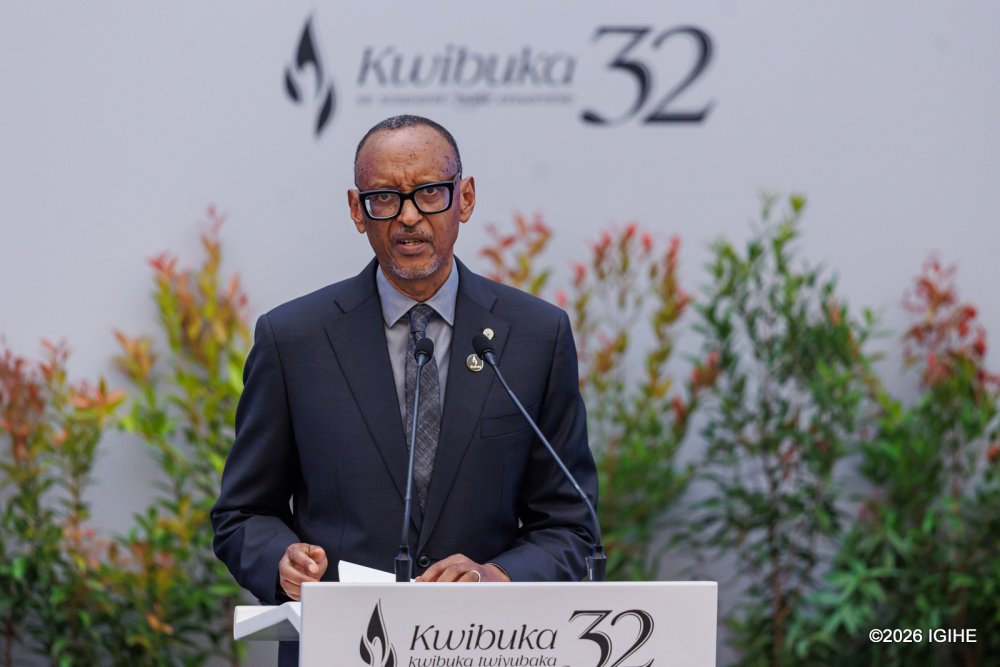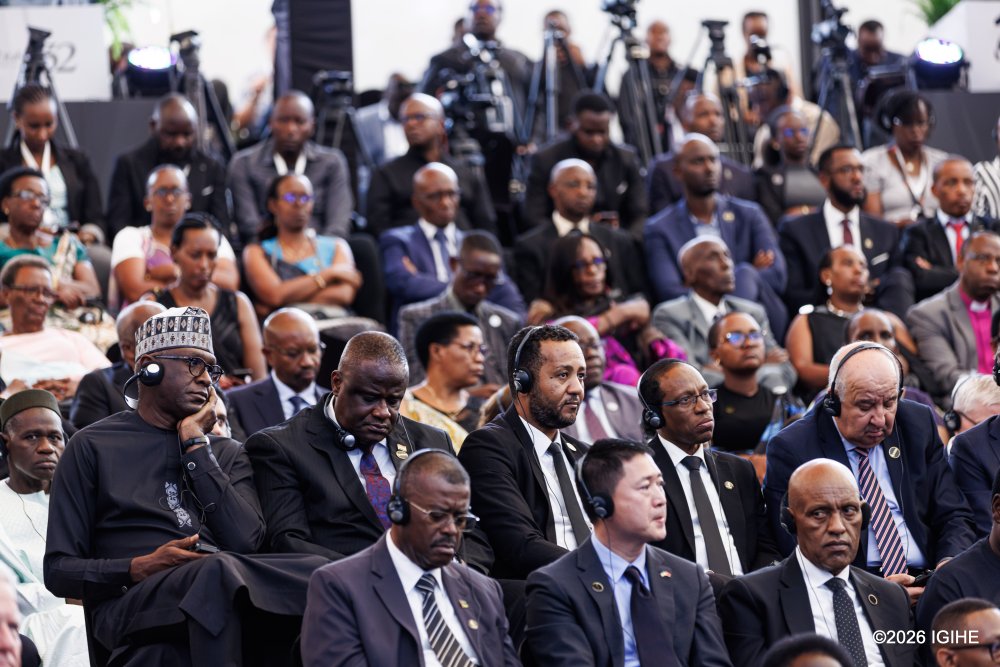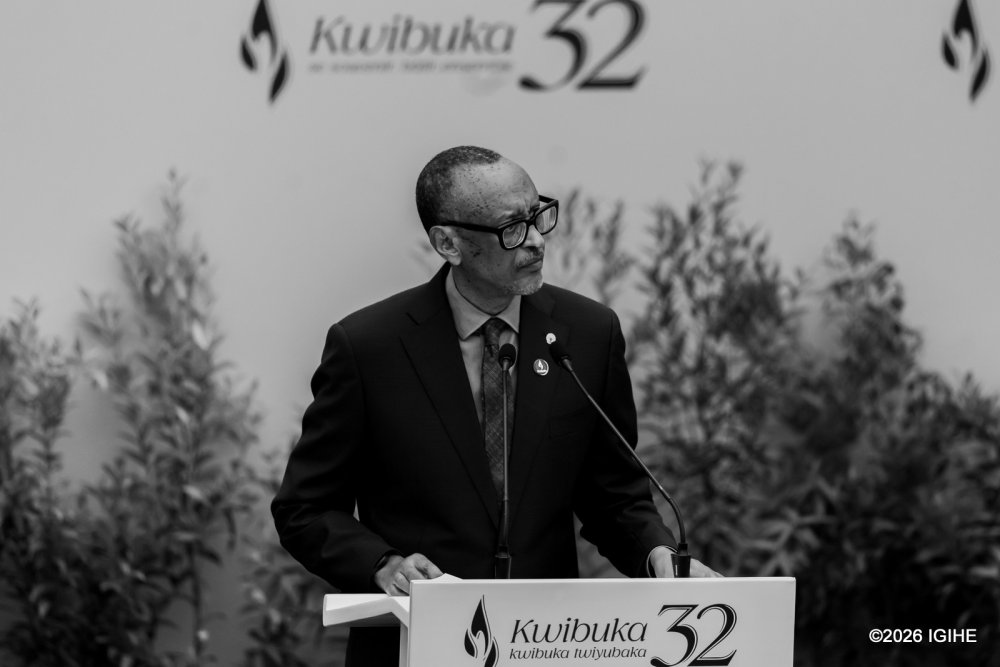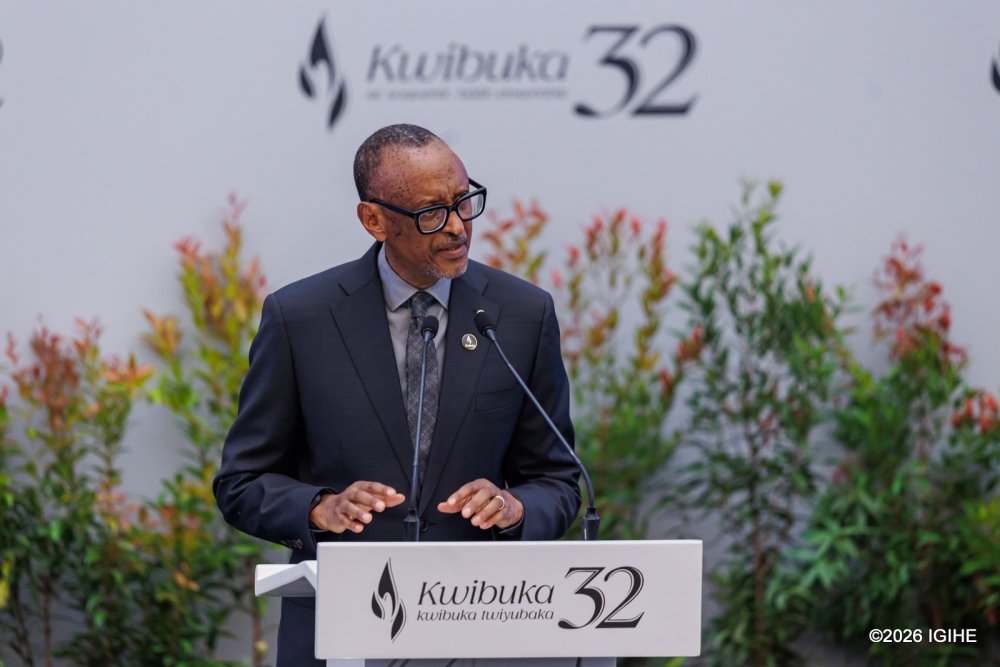
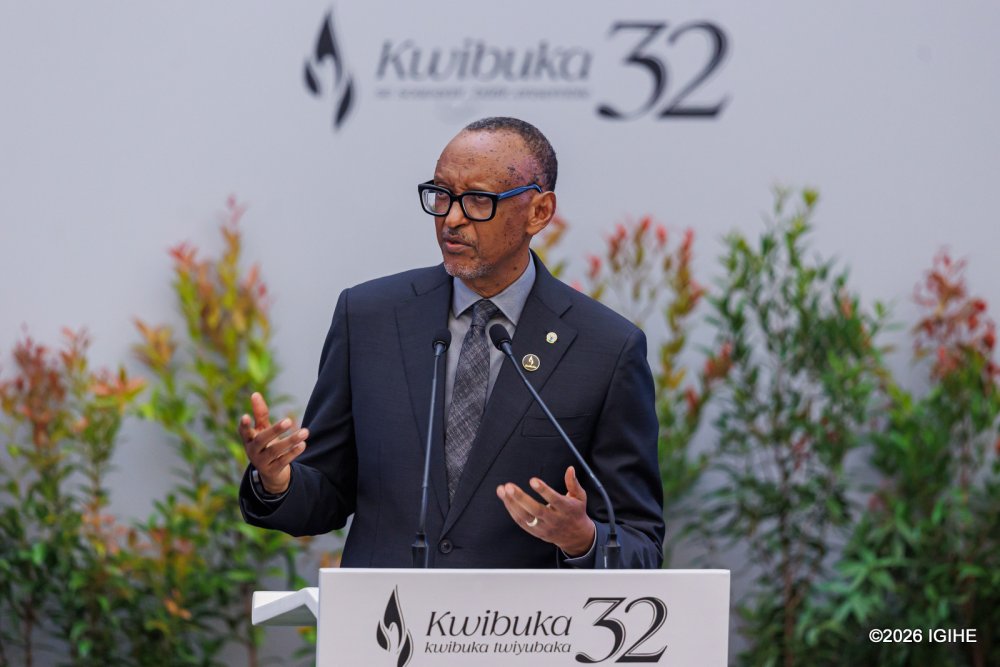
President Paul Kagame has said that the tragedy of the 1994 Genocide against the Tutsi will never happen again, stressing that Rwandans will defend themselves and ensure such atrocities are never repeated.
He made the remarks while launching the national mourning week marking the 32nd commemoration of the Genocide against the Tutsi, a period during which Rwanda remembers more than one million victims killed in 1994.
Genocide Survivor Shares Harrowing Testimony
Kagame’s speech followed testimony from genocide survivor Ngiruwonsanga Théoneste, who recounted horrific experiences he witnessed while fleeing violence in April 1994.
He described how on April 12, 1994, a Tutsi man named Bahati Enock, who had been gathered with others at a sector in Cyangugu, was killed by Interahamwe militia who then removed and cooked his heart, claiming they did not want his intelligence to “go to waste.”
Ngiruwonsanga also narrated how many people seeking refuge in a church were later attacked by the militia despite being told the attackers would not return.
“Rwandans Will Not Die Twice”
President Paul Kagame said testimonies like these are real and undeniable, warning those who attempt to distort the history of the genocide.
He stressed that Rwanda will never again allow its people to be killed in such a manner.
“You cannot kill a person twice,” Kagame said. “If someone attempts it, Rwanda will kill them before they kill Rwanda. No one will kill Rwandans twice.”
He added that some people outside the country attempt to mock or distort Rwanda’s history, but insisted that the country will never again allow itself to be destroyed.
Remembering as a Source of Strength
Kagame emphasized that remembrance plays a crucial role in helping Rwanda overcome the divisions that nearly destroyed the country.
“Today gives us strength,” he said. “We draw strength from the survivors who remain a source of humanity for our country. To all survivors, know that you are not alone. The entire nation stands with you.”
He added that Rwanda’s progress since the genocide has been possible because Rwandans united to rebuild their nation.
Evidence of the Genocide Recognized Internationally
Kagame noted that the truth about the genocide has been confirmed through international courts that convicted those responsible, as well as through testimonies collected during Gacaca Courts.
He also recalled that in 2018 the United Nations officially adopted the correct term “Genocide against the Tutsi,” a decision implemented by nearly all countries.
However, Kagame warned that attempts to distort the truth still exist and that ignoring early warning signs—such as hate speech—can allow atrocities to happen again.
Warning Against Ignoring Early Signs
He said that before 1994, many warnings about preparations for genocide were ignored by the international community.
Kagame explained that militias were openly trained, weapons were stockpiled, and lists of Tutsi to be killed were prepared. Yet many people who spoke out were silenced or killed.
He also referred to a message sent in January 1994 by the UN peacekeeping commander to headquarters in New York warning that militias were gathering weapons and preparing lists of Tutsi to be targeted.
Despite this warning, the commander was instructed to inform the same government accused of preparing the genocide and not to take further action.
Kagame said such failures show how genocide can occur when warning signs are ignored, adding that similar patterns can still be seen in different parts of the region today.
He concluded that when the genocide began, Tutsi were hunted everywhere with no place safe for them.