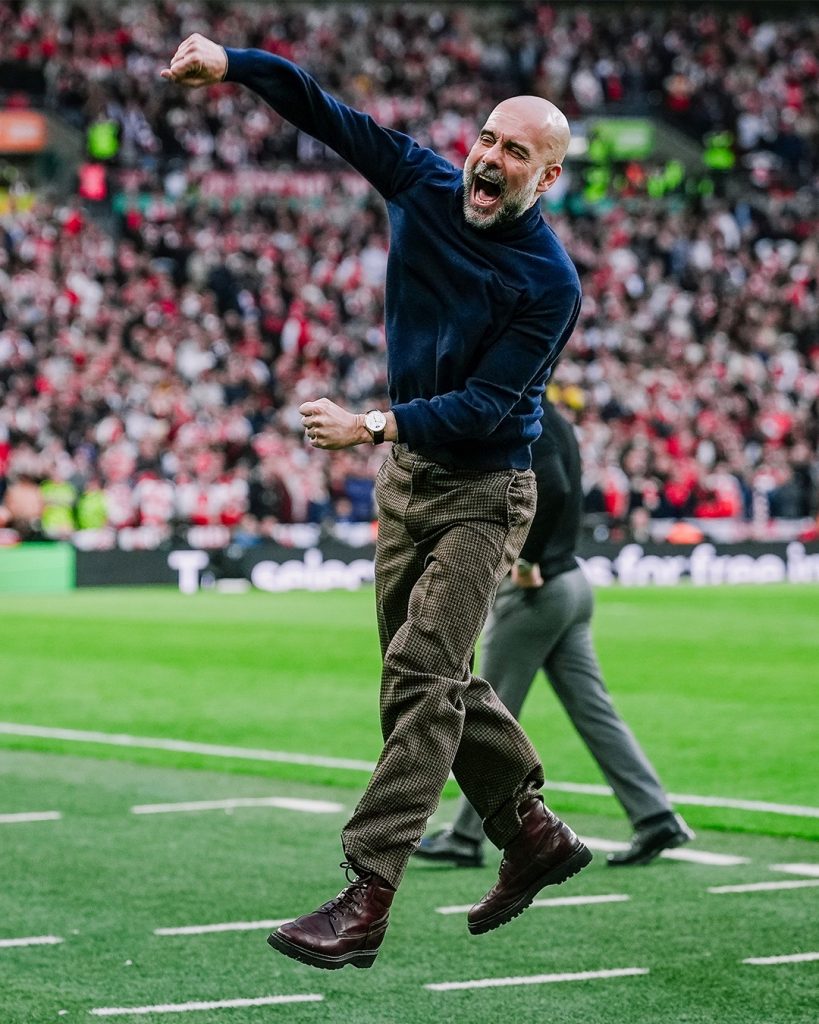
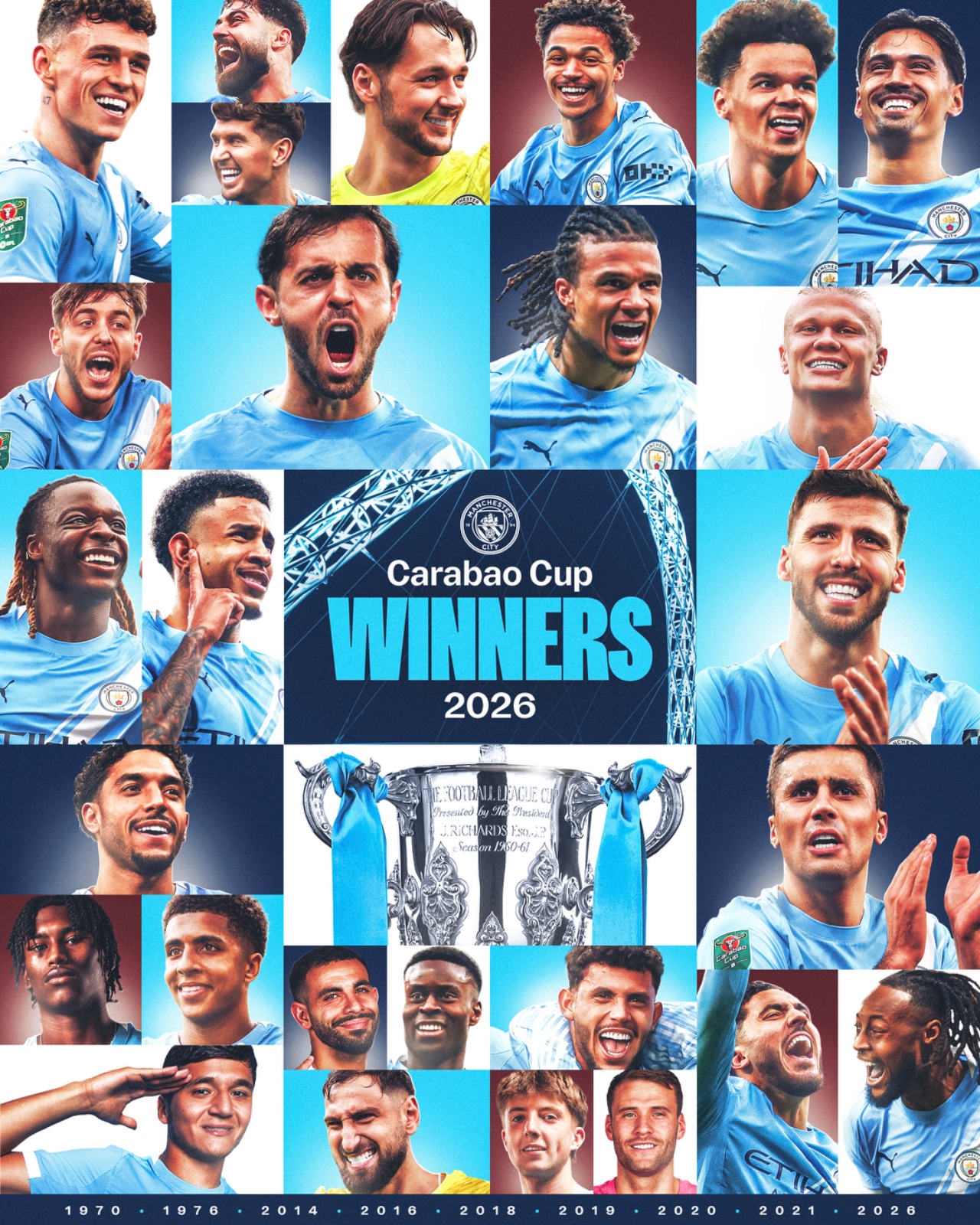
Manchester City produced a composed and clinical performance to defeat Arsenal 2-0 in the Carabao Cup final, turning a tightly contested tactical battle into a decisive victory at Wembley.
Arsenal started in a 4-3-3 formation with Kepa Arrizabalaga in goal behind a back four of Ben White, William Saliba, Gabriel Magalhães and Piero Hincapié. In midfield, Martín Zubimendi anchored alongside Declan Rice and Kai Havertz, while Bukayo Saka, Viktor Gyökeres and Leandro Trossard led the attack.
Manchester City lined up in a fluid 4-2-3-1, with James Trafford in goal, protected by Nico O’Reilly, Nathan Aké, Abdukodir Khusanov and Matheus Nunes. Rodri and Bernardo Silva controlled midfield, while Rayan Cherki operated behind a dynamic front line of Jérémy Doku, Antoine Semenyo and Erling Haaland.
The opening phase belonged to Arsenal, who pressed aggressively and nearly took the lead through Havertz, only to be denied by a crucial save from Trafford. However, as the first half progressed, City began to assert control, with Rodri dictating tempo and the wide players stretching Arsenal’s defensive shape.
City’s tactical patience paid off after the break. The breakthrough came in the 60th minute when Nico O’Reilly capitalized on a mistake from Kepa to put City ahead. Just four minutes later, the young defender struck again, powering in a header to double the lead and effectively decide the final.
Arsenal struggled to recover from the quick double blow. Despite their strong midfield structure and early intensity, they lacked cohesion in the final third and were unable to break down City’s disciplined defensive setup. Substitutions failed to shift momentum, and their attacking trio found little space against City’s compact shape.
For City, the performance highlighted their tactical maturity. Rodri and Bernardo Silva controlled the rhythm, while Doku and Semenyo provided width and directness. Haaland remained a constant threat, even without scoring, occupying Arsenal’s central defenders and creating space for others.
The victory marks an important response for Manchester City following recent setbacks, reaffirming their dominance in domestic competitions. For Arsenal, the defeat raises questions about their ability to convert promising performances into major trophies, particularly in high-pressure moments.
In the end, it was City’s efficiency, composure and ability to exploit key moments that separated the two sides, turning a balanced contest into a convincing final result.