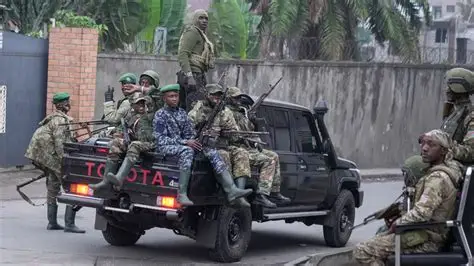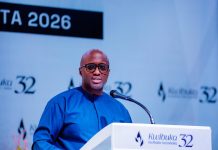
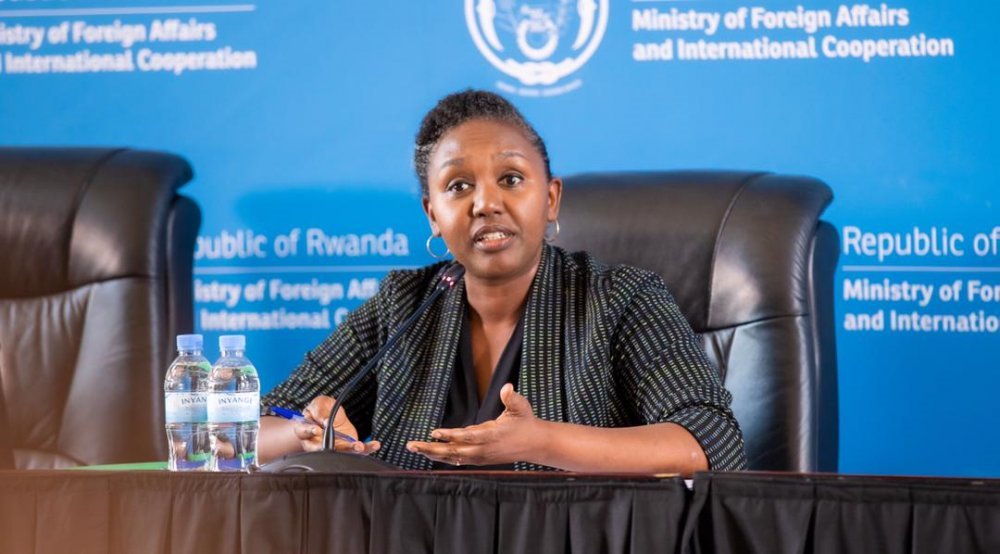
The Spokesperson of the Government of Rwanda, Yolande Makolo, has stated that sanctions imposed by the United States on the Rwanda Defence Force (RDF) will not bring an end to the ongoing conflict in eastern Democratic Republic of Congo (DRC).
Since the announcement of the sanctions on the evening of March 2, 2026, officials in the DRC government have openly welcomed the move, expressing gratitude to Washington for what they described as a long-awaited response to their repeated requests.
DRC’s Minister of Foreign Affairs, Thérèse Kayikwamba Wagner, said the U.S. decision demonstrates that no party should repeatedly violate agreements with impunity, adding that Congolese authorities remain firm in their position.
Responding to Kayikwamba’s remarks, Makolo accused the DRC government of continuing what she described as a campaign of misinformation, insisting that facts on the ground show that Kinshasa remains the primary supporter of the FDLR, a militia group that Rwanda considers a terrorist organization and a major threat to its national security.
“The DRC government remains the number one supporter of the FDLR, which continues to threaten Rwanda’s security,” Makolo said. “No amount of misinformation or resources invested in propaganda to conceal this support will resolve the problem.”
Makolo further described the U.S. sanctions against the RDF and some of its officials as biased, arguing that they risk emboldening the DRC government to pursue a military solution rather than a political one. According to her, this approach could further escalate the conflict, increase criminality, and result in more loss of life.
“What is unfortunate is that biased sanctions only push the DRC government to double down on seeking a military solution,” she said. “The consequences are what we are witnessing today: escalation of the conflict, rising criminality, wasted opportunities, and, most tragically, loss of life.”
Both the DRC government and the United States have accused Rwanda of supporting the AFC/M23 coalition. However, Makolo rejected the allegation, saying the group emerged in response to persecution faced by Congolese communities, which she linked to what she described as the DRC government’s support for actors driven by genocidal ideology.
She pointed to inflammatory rhetoric targeting Tutsis, including statements made by former DRC army spokesperson, Maj. Gen. Sylvain Ekenge, on national broadcaster RTNC, which she argued incite ethnically motivated violence that could destabilize the wider region.
Makolo emphasized that any genuine effort to resolve the crisis must be grounded in truth rather than distortion or denial, warning that sustainable peace cannot be achieved if root causes are ignored.
Under the Washington Agreement signed in June 2025 and reaffirmed in December of the same year, the DRC committed to taking concrete steps to dismantle the FDLR, while Rwanda agreed to lift defensive measures it had put in place.
Despite a report by United Nations experts indicating that the DRC continued to provide support to the FDLR even after the Washington peace agreement was signed, the United States has not taken action or publicly addressed those findings.