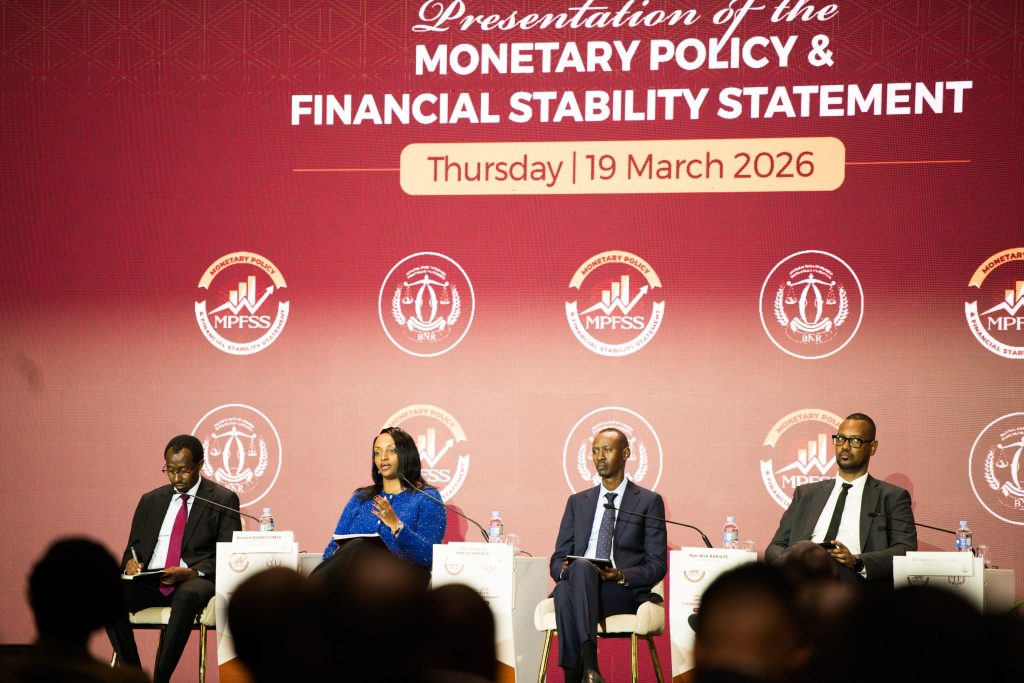
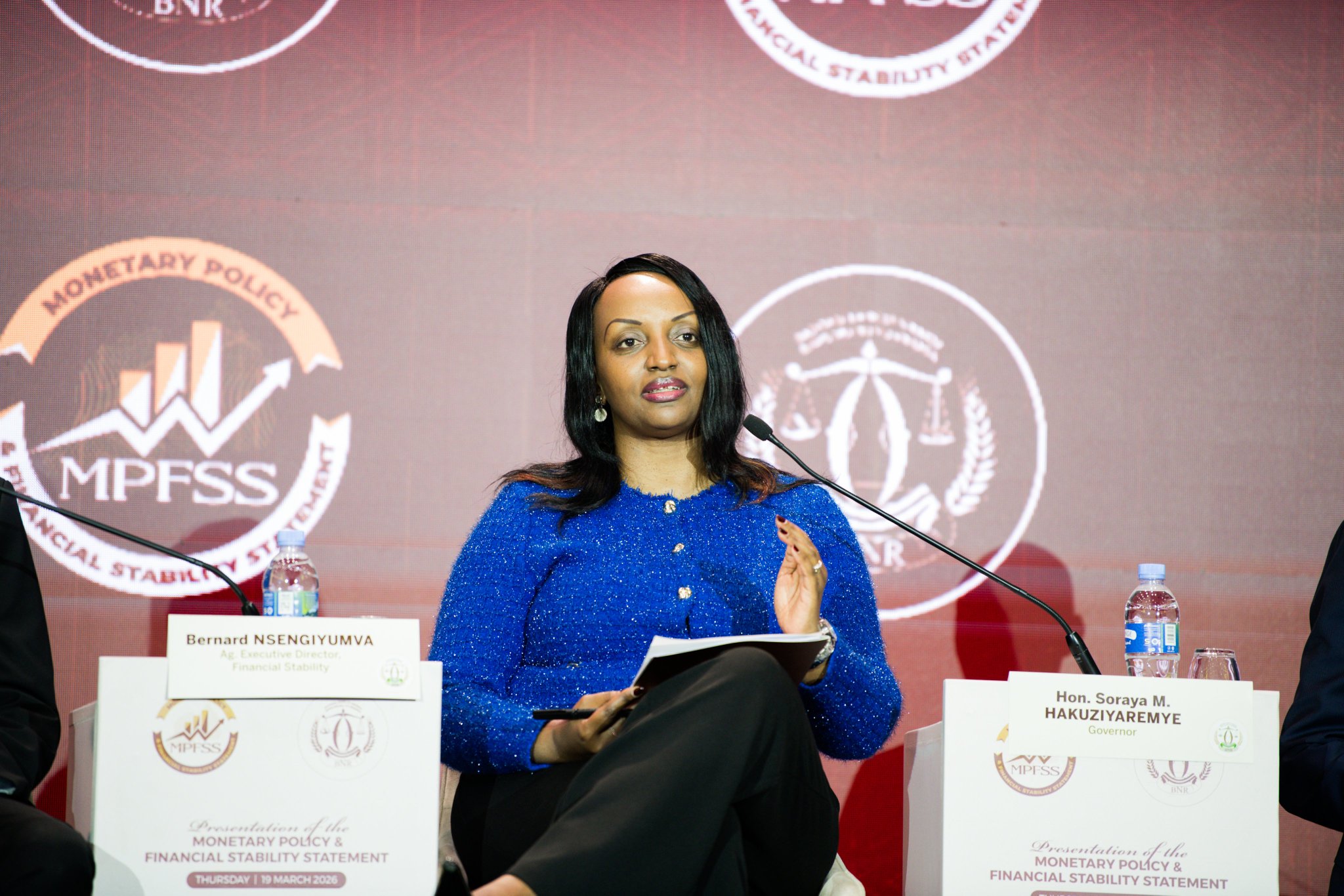
The Governor of the National Bank of Rwanda, Soraya Hakuziyaremye, has said there is currently no significant increase in fuel and gas prices on Rwanda’s market despite the ongoing conflict in the Middle East.
She made the remarks on Thursday, March 19, while presenting a six-month economic outlook report covering 2025 and the first quarter of 2026. The event brought together key stakeholders in Rwanda’s economic sector to assess performance and discuss strategies to sustain growth while limiting price pressures.
Global Concerns, Limited Local Impact
Discussions during the session highlighted rising global fuel prices linked to the conflict involving Iran, Israel, and the United States, as well as concerns over the possible disruption of the Strait of Hormuz, a route through which about 20% of the world’s oil passes.
Despite these global pressures, Hakuziyaremye noted that Rwanda has not yet experienced a substantial price increase. Diesel has seen only a slight rise, reaching approximately Rwf 1,948 per litre.
“We expect Rwanda Utilities Regulatory Authority (RURA) to review prices as usual every two months, meaning any impact from global price increases may become visible around May,” she explained.
Government Measures to Cushion Impact
The central bank governor emphasized that Rwanda has experience in managing external economic shocks, citing past crises such as COVID-19 and the 2022 Russia-Ukraine conflict.
She outlined several government measures aimed at stabilizing prices, including fuel subsidies to reduce the burden on consumers and businesses.
“One of the key measures is to absorb part of the fuel cost so that prices do not rise sharply and negatively affect citizens and traders,” she said.
Additionally, Rwanda maintains strategic reserves of fuel and gas capable of sustaining the country for more than four months in case of major supply disruptions.
Preparedness and Economic Stability
Hakuziyaremye also highlighted efforts to secure essential imports such as food and agricultural inputs. Fertilizers and other farming supplies had already been procured ahead of the planting season, minimizing risks in the short term.
She reaffirmed that the government is prepared to continue implementing such measures if necessary to keep inflation under control and protect economic stability.
“These strategies will remain in place as needed to ensure that price increases remain manageable,” she added.
The National Bank of Rwanda also pledged continued coordination with relevant institutions to prevent excessive price hikes and maintain market stability as global uncertainties persist.