
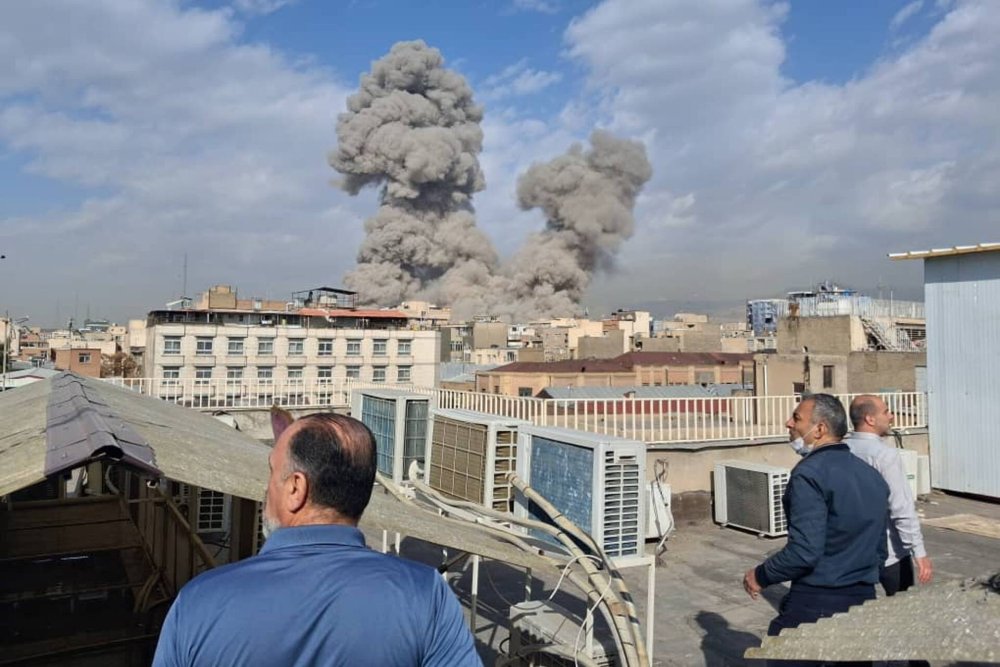
On April 8, 2026, it was announced that the President of the United States had reconsidered his earlier threat to destroy Iran.
At the end of last week, Donald Trump warned Iran that it had to reopen the Strait of Hormuz a passage through which about 20% of the world’s petroleum products pass by 2:00 a.m. Kigali time on Wednesday.
In a message posted on Truth Social on April 7, 2026, Trump had said that if Iran failed to comply, the United States would destroy it.
However, shortly before the deadline he had set, Trump announced that he was willing to halt attacks on Iran if Tehran also agreed to immediately reopen the Strait of Hormuz.
In his statement on Truth Social, Trump said the decision followed discussions with Pakistan’s Prime Minister, Shehbaz Sharif, and Pakistan’s army chief, Asim Munir, who requested that he stop plans to strike Iran.
Trump said that if the Islamic Republic of Iran agreed to fully and safely reopen the Strait of Hormuz, he would suspend military operations and attacks against the country for two weeks.
According to Iran’s state media, ten key points have been proposed as part of efforts to end the conflict.
Among them is the cessation of fighting in countries affected by the conflict, including Iraq, Lebanon, and Yemen, as well as a permanent halt to hostilities against Iran.
Other proposals include permanently resolving conflicts across the Middle East and reopening the Strait of Hormuz.
The plan also calls for establishing security rules to protect navigation through the strait and safeguard shipping activities in the area.
Additional points include compensation for damage caused to Iran, lifting economic sanctions imposed on the country, and releasing Iranian assets frozen by the United States.
Iran would also be required to confirm that it will no longer pursue or develop nuclear weapons.
The final point proposes that both sides immediately cease hostilities once these conditions are agreed upon.
The Strait of Hormuz is one of the most strategic maritime routes in the world, with about 20% of global petroleum shipments passing through it. Since Iran restricted the route, attacks have been reported on cargo ships believed to belong to countries allied with the United States.
Around 3,000 ships normally pass through the strait every month, although traffic has dropped significantly since the conflict escalated. Nearly one-third of global fertilizer shipments also pass through the route, along with food supplies and various technological equipment.
Casualties from the conflict have been reported across several countries. Between February 28, when the war began, and March 3, 2026, at least 2,076 people had been killed in Iran and 26,500 injured.
In Lebanon, 1,345 people had died and 4,040 were injured. In Iraq, 109 people were killed. Seven people died in Kuwait, while four deaths were reported in Syria.
In Jordan, 29 people were injured, while Israel reported 24 deaths and 6,594 injuries.
In Palestine, four deaths had been recorded by April 3, while Bahrain reported three fatalities and Qatar 16 injuries.
The United Arab Emirates had recorded 12 deaths and 190 injuries.
Saudi Arabia reported two deaths and 22 injuries, while Oman reported three deaths and 15 injuries. The United States had lost 13 people, with about 200 others injured.