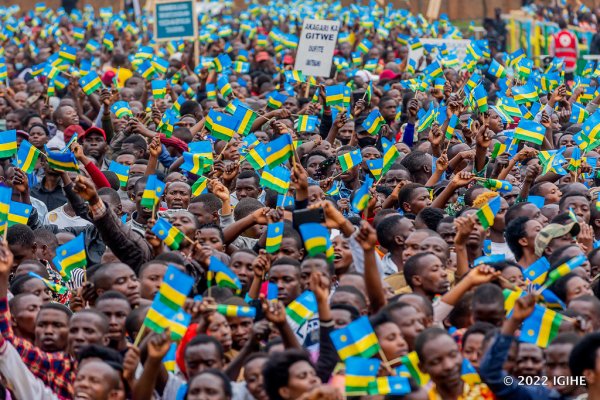
A 2025 national survey on unity among Rwandans shows that 99.1% believe the country’s leadership is inclusive, highlighting strong levels of resilience across the population.
The study, conducted among more than 12,000 respondents from different sectors and regions of Rwanda, found that the overall resilience index stands at 90.8%. The leading factor behind this score is the widespread perception that national leadership does not exclude any group.
According to the findings, 93% of respondents believe that the former ruling party, MRND, played a role in weakening national unity before 1994. Similarly, 93% pointed to political parties such as APROSOMA and PARMEHUTU as having contributed to ethnic division and discrimination during the early stages of the country’s unity breakdown.
Following the Genocide against the Tutsi in Rwanda, Rwanda introduced policies aimed at ensuring equal rights for all citizens and eliminating discrimination based on ethnicity or region across all sectors.
The survey also revealed that 99% of respondents say people in their communities interact freely without regard to background, and that commemoration activities play a key role in fostering reconciliation.
Additionally, 94% said citizens actively participate in programs designed to promote social cohesion and peaceful coexistence.
Jean Damascène Bizimana, Minister of National Unity and Civic Engagement, recently told senators that the progress in unity, reconciliation, and resilience indicators is largely due to government programs promoting inclusion and social cohesion.
“Among the key drivers of this progress are policies that promote equal opportunities, fight injustice and discrimination, support healing, ensure justice, and improve citizens’ livelihoods in an inclusive manner,” he said.
Further findings show that 98.6% of respondents believe Rwanda promotes a culture of dialogue and consensus-building, while 98.1% say citizens feel represented in decision-making processes. Meanwhile, 97.8% affirm that the country upholds the rule of law and equal justice, and 87.2% believe power-sharing contributes significantly to strengthening national resilience.